
Choosing the Right Urea Cream for Cracked Heels: A Guide to the Best Urea Cream for Feet
Affiliate Disclosure: This post contains affiliate links. If you click through and make a purchase, I may receive a small commission at no additional cost to you. I only recommend products that meet the high standards of The Heel Guide for home foot care.
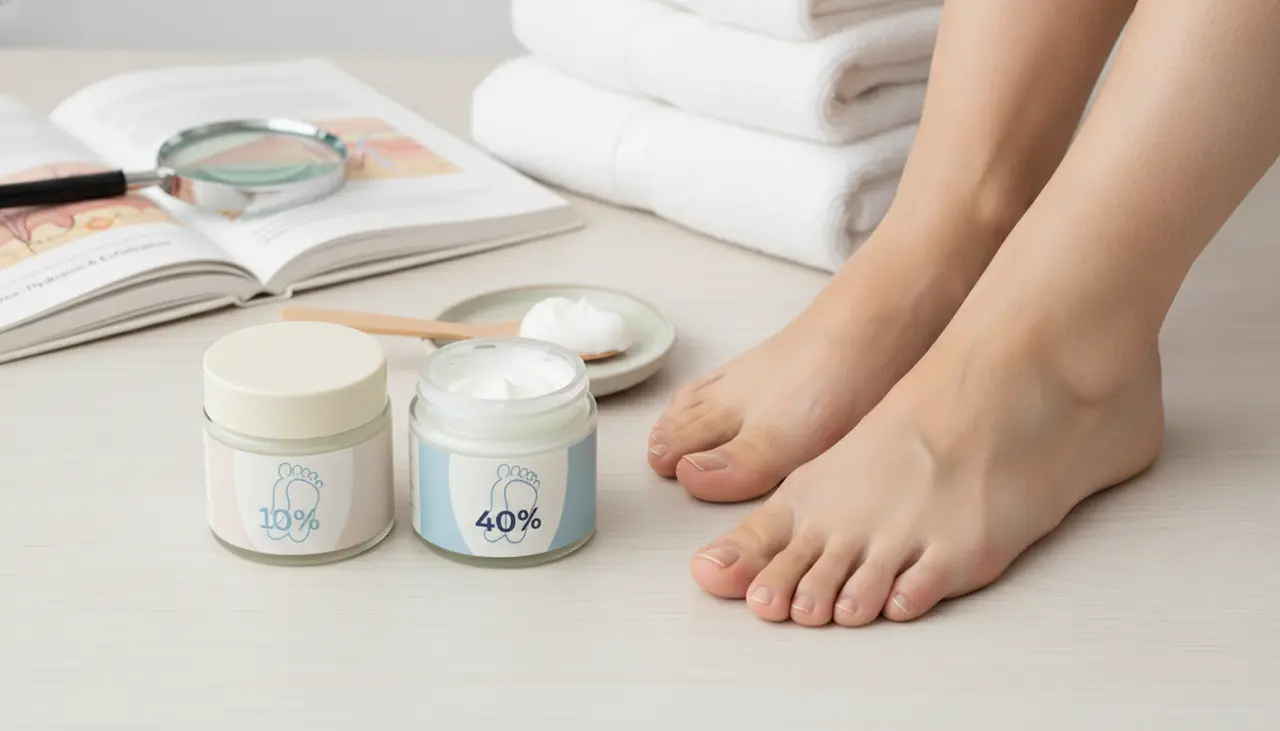
To find the best urea cream for feet, you must match the concentration percentage to your specific skin concern. For daily hydration and preventing dryness, a 10% to 20% urea cream is ideal. If you are dealing with thick calluses or deep, painful cracks, a 40% urea cream acts as a potent "keratolytic," breaking down tough skin so it can be easily filed away.
Choosing the right cream is about balancing effectiveness with safety. While 40% urea is incredibly efficient at softening "rhino skin," it can be too intense for sensitive areas. Most busy adults find that a two-step approach—using a high-percentage cream for a few days to "reset" the heels, followed by a lower-percentage cream for maintenance—delivers the best results with the least effort.
Who This Guide Is For
If you’ve ever felt embarrassed to wear sandals or winced when your heels snagged on the bedsheets, this guide is for you. We know you’re busy—between work, family, and the million other things on your plate, you don't have time for products that don't work. This breakdown is designed for the home self-care enthusiast who wants professional-grade results without needing a professional appointment.
Understanding Urea: Your Secret Weapon
Urea is a "gold standard" ingredient in foot care because it is a humectant (it draws moisture into the skin) and, at higher concentrations, a keratolytic (it dissolves the protein "glue" that holds dead skin cells together).
| Urea Concentration | Primary Function | Best Suited For |
|---|---|---|
| 5% - 10% | Intensive Hydration | Daily maintenance and mildly dry skin. |
| 20% | Skin Softening | Noticeable roughness and early-stage calluses. |
| 40% + | Callus Breakdown | Thick, hardened heels and deep "fissures" (cracks). |
The Best Urea Creams for Every Foot Care Need
Best for Deep Callus Repair: 40% Urea Gel or Cream
When your heels have reached the point of no return, you need the heavy hitters. A 40% urea concentration is designed to aggressively soften the outermost layer of the skin.
- Why it works: It turns hard calluses into a soft, almost "jelly-like" texture that can be gently removed with a 15-minute pedicure routine.
- The Tradeoff: These formulas can be sticky. It is best to apply them at night and cover them with socks.
- Pro Tip: Look for formulas that include salicylic acid for extra exfoliation or tea tree oil for its soothing properties.
Best for Daily Maintenance: 10% to 20% Urea Lotion
Once your feet are smooth, you want to keep them that way without the intensity of a 40% formula. A 10% urea cream is gentle enough for daily use and helps maintain the skin’s moisture barrier.
- Why it works: It provides deep hydration without the risk of over-exfoliating the healthy skin underneath.
- The Tradeoff: It won't "fix" a heavy callus overnight; it’s a marathon, not a sprint.
- Pro Tip: Apply this immediately after your shower while your skin is still slightly damp to lock in maximum moisture.
Best for Overnight Recovery: Urea with Intensive Occlusives
If you are a "set it and forget it" type of person, look for a urea cream that also contains petrolatum or shea butter. These ingredients create a seal over the skin.
- Why it works: It forces the urea to penetrate deeper while you sleep.
- The Tradeoff: Can feel heavy or greasy if you try to walk around immediately after application.
- Supportive Advice: Pair these with moisturizing socks for overnight repair to protect your sheets and intensify the softening process.
Common Beginner Mistakes to Avoid
- Applying 40% Urea to Broken Skin: If your cracks are bleeding or "raw," high-percentage urea will sting significantly. Use a plain ointment until the skin has closed before starting urea treatments.
- Using High Percentages Everywhere: Only apply 40% urea to the callused areas (heels, balls of feet). Avoid the thinner skin on the top of your foot or between your toes, as it can cause irritation.
- Inconsistency: Urea works best when used regularly. Skipping days allows the skin to harden again, making your electric foot file work twice as hard later.
- Not Washing Hands: Always wash your hands after applying a high-percentage urea cream. You don't want to accidentally rub your eyes with 40% urea on your fingers!
How to Use Urea Cream Safely at Home
- Step 1: Cleanse. Start with clean, dry feet.
- Step 2: Target. Apply the high-percentage (40%) cream only to the thickened, white skin of the callus.
- Step 3: Seal. For best results, put on a pair of cotton socks.
- Step 4: Maintain. Once the callus has softened (usually after 3-5 days), switch to a 10% urea cream for daily upkeep.
Frequently Asked Questions
How long does it take for urea cream to work? For 40% concentrations, you will usually notice a softening of the skin within 24 to 48 hours. For deep cracks to fully resolve, consistent use for 1–2 weeks is typically required.
Can I use urea cream on my hands? Yes, but stick to lower concentrations (5-10%) unless you have severe occupational calluses. The skin on the back of the hands is much thinner than the skin on the soles of the feet.
Is urea cream safe? Urea is a naturally occurring component of your skin's moisturizing factor. However, high concentrations (40%+) are potent. Always perform a patch test on a small area first to ensure you don't have a sensitivity to the formula.
Do I still need to use a foot file? Yes. Urea cream softens the dead skin, but a manual or electric foot file is often needed to physically remove the softened debris. Think of the cream as the "pre-treatment" that makes the filing process effortless and safe.