
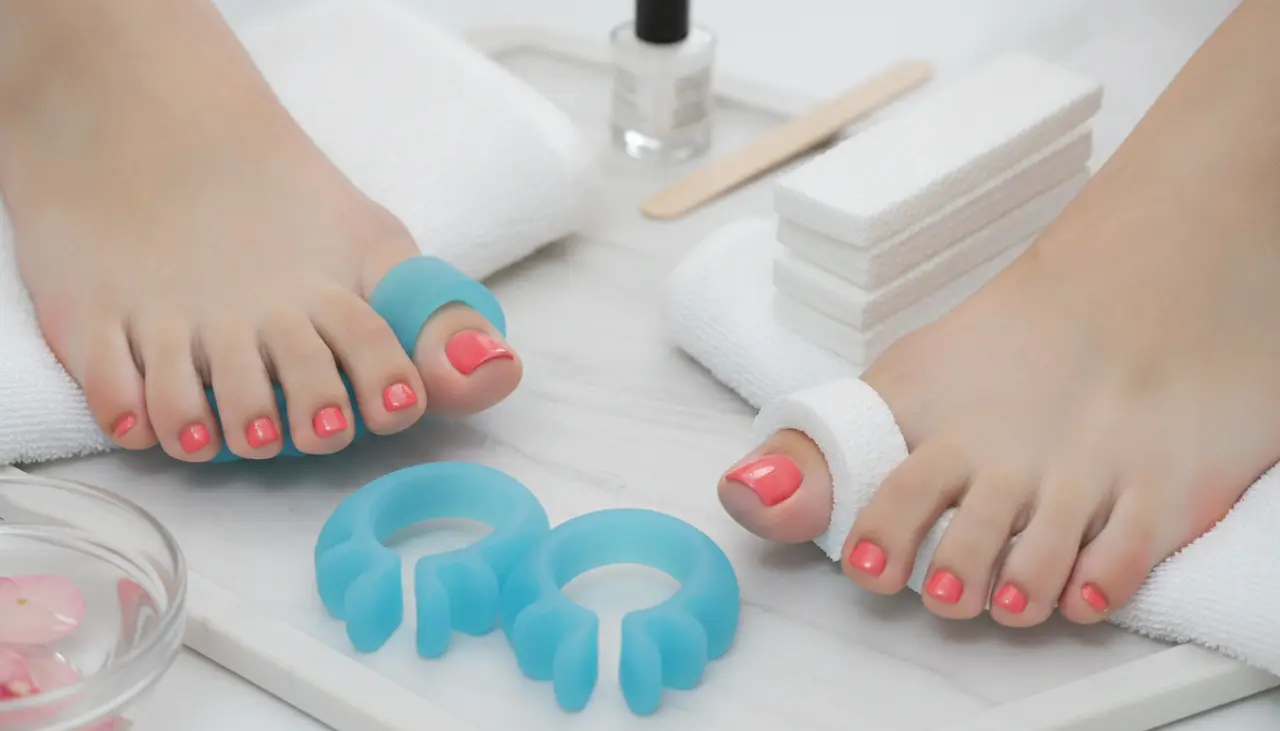
Comparing Toe Separators for Perfect Polish: Silicone vs. Foam for Your Home Pedicure
Affiliate Disclosure: This post contains affiliate links. If you click through and make a purchase, I may earn a small commission at no extra cost to you. I only recommend tools that meet the high standards of The Heel Guide for durability and effectiveness.
For a smudge-free home pedicure, the best toe separators are those that balance comfort with stability. Silicone separators are the top choice for long-term use, offering ergonomic alignment and easy sanitization. Foam separators remain the best option for quick, budget-friendly sessions where you want a lightweight, disposable tool.
If you are looking for a "set it and forget it" solution that helps with toe alignment while your polish dries, high-quality silicone spacers are the winner. However, if you have sensitive skin or very narrow spaces between your toes, classic soft foam might be more comfortable for short periods.
The Busy Adult’s Guide to Smudge-Free Toes
We’ve all been there: you finally find twenty minutes of peace to paint your nails, only for a stray toe to wiggle against its neighbor, ruining your hard work. Or worse, you try to walk to the kitchen for a coffee and realize your "temporary" toe-spacing solution (usually wadded-up paper towels) has shifted.
Choosing the right toe separator isn't just about the polish; it’s about making your self-care routine feel less like a chore and more like a spa moment. Whether you’re squeezing in a pedicure during nap time or winding down after a long shift, the right tools make all the difference. This guide compares the two heavy hitters—silicone and foam—to help you build your perfect Essential Toolkit.
Comparison: Silicone vs. Foam Toe Separators
| Feature | Silicone Separators | Traditional Foam Separators |
|---|---|---|
| Durability | High (Lasts for years) | Low (Single or few uses) |
| Comfort | Ergonomic & Soft | Soft but can feel "scratchy" |
| Sanitization | Dishwasher safe / Soap & Water | Difficult to clean (Porous) |
| Alignment | Provides gentle stretching | Minimal stretching |
| Best For | Regular DIYers & Foot Health | Travel & One-time events |
The Case for Silicone: The Durable Professional Choice
Silicone separators have revolutionized the home pedicure. Unlike the stiff plastic versions of the past, modern medical-grade silicone is flexible and mimics the natural feel of your skin.
Why they are great for busy schedules:
- Easy Cleanup: You can wash them with Isopropyl Alcohol or warm soapy water in seconds.
- Multi-tasking: Many silicone spacers are designed for "active" wear. You can often wear them around the house (without shoes) to help stretch the toes while your polish sets.
- Eco-friendly: You buy them once, and they stay in your kit for years.
Practical Tradeoff: Silicone can feel a bit "heavy" if you aren't used to toe stretching. If you have very tight toe joints, start with a "pedi-spacer" style (individual gems or units) rather than a solid bar.
The Case for Foam: The Classic Convenience
There is a reason professional salons still reach for those colorful foam bars. They are incredibly lightweight and put almost zero pressure on the joints.
Best for:
- Sensitive Skin: If silicone feels too "grippy" or causes irritation, the soft, airy texture of foam is a relief.
- Travel: They weigh nothing and can be tossed in a bag without worrying about losing an expensive tool.
- Quick Polish Changes: When you aren't looking for alignment benefits and just want to get the job done.
Practical Tradeoff: Foam is porous. It traps skin cells, moisture, and bacteria. To keep your feet healthy, these should be treated as semi-disposable. Once they lose their shape or get polish on them, it’s time for a new pair.
Individual Spacers vs. The "Bar" Design
When shopping for the best toe separators, you’ll notice two main shapes.
- The Single Bar: This is one piece of material with four slots. It’s the easiest to put on and take off. It’s perfect for the "Polish & Aesthetics" pillar of your routine because it keeps everything perfectly uniform.
- Individual Spacers: These look like little silicone gems or "toes." You place them only where you need them. These are fantastic if you have a specific toe that tends to overlap, or if a full bar feels too wide for your foot.
While your polish is drying, remember that the separator is only half the battle. To truly protect your work from the hazards of a busy life, pair your separators with a high-quality top coat. You can find our top recommendations in our guide on The Best Quick-Dry Top Coats for Active People: Salon Results in Minutes.
Beginner Mistakes to Avoid
- Putting them on too late: Always insert your separators before you start with the base coat. Trying to wiggle a foam bar between your toes with wet polish is a recipe for disaster.
- Ignoring Hygiene: Even if you are the only one using them, skin cells build up. Wipe down silicone tools after every use.
- Over-stretching: If you feel pain, the separator is too thick. Your toes should be separated, not strained.
- Walking in them: Unless they are specifically designed as "alignment socks" or flexible silicone spacers, avoid walking. You risk tripping and, of course, smudging that fresh lacquer.
Frequently Asked Questions
How do I clean my silicone toe separators? The best way is to wash them with warm water and a mild antibacterial soap. For a deeper clean, you can wipe them down with Isopropyl Alcohol. Ensure they are completely dry before storing them in your kit to prevent any moisture buildup.
Can toe separators help with foot fatigue? While we don't provide medical diagnoses, many users find that the gentle stretching provided by ergonomic silicone separators helps relax the feet after a long day in restrictive shoes. It’s a great addition to a routine that includes a soak with Epsom Salt.
How long should I leave them in? For polish purposes, leave them in until your nails are dry to the touch—usually 10 to 15 minutes if using a quick-dry formula. If you are using them for toe alignment and comfort, start with 5-10 minutes and gradually increase as your feet get used to the sensation.
Final Thoughts
Whether you choose the professional feel of silicone or the soft simplicity of foam, toe separators are a non-negotiable for a salon-quality finish at home. They give you the stability you need to apply polish precisely, especially when working on those tricky smaller toes.
Once your toes are perfectly spaced and painted, don't forget the rest of your foot health! A great pedicure looks best on well-maintained skin. If you're dealing with stubborn dry patches, check out our deep dive into Foot Peel Masks: Which Ones Actually Work? to get your heels as smooth as your polish.