
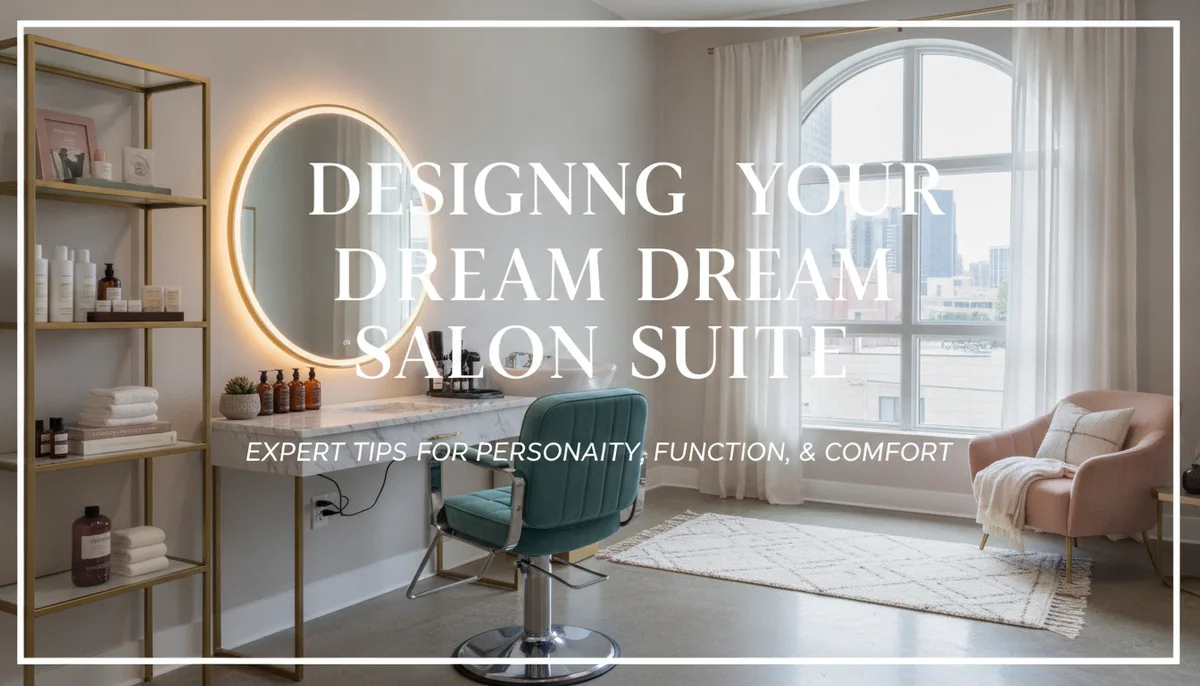
Designing Your Dream Salon Suite: Expert Tips for Personality, Function, and Comfort
The transition from a traditional salon employee to a salon suite owner is one of the most significant milestones in a beauty professional's career. It represents a shift from being a service provider to becoming a business owner. However, the four walls of a suite can either be a confining box or a launchpad for a luxury brand.
According to Megan Communale of My Salon Suite, a contributor to the Beauty Pro Book Club, the most successful salon suites are those that master a delicate equilibrium. To build a thriving business, you must balance personality, function, and comfort. Your space is not just where you work; it is a physical manifestation of your brand and the primary tool for leaving a lasting impression on every guest.
The Personality Pillar: Infusing Your Brand into the Space
When a client walks into a salon suite complex, they often pass dozens of identical doors. What happens when they open yours? Personality is what differentiates a "booth renter" from a "boutique owner."
Defining Your Aesthetic
Before buying a single piece of furniture, define your brand’s voice. Are you high-end and clinical? Bohemian and relaxed? Edgy and modern? Megan Communale emphasizes that your space should support your business goals. If your goal is to charge premium prices for specialized services, your decor must reflect that value.
- Color Palette: Stick to a 3-color rule to keep the space from feeling cluttered.
- Statement Pieces: One or two high-impact items, like a custom neon sign or a designer accent chair, create focal points that clients will remember (and photograph for social media).
- Consistency: Your physical space should match your digital presence. If your Instagram is minimalist and white, your suite should follow suit.
Creating an "Instagrammable" Environment
In the modern beauty industry, your clients are your best marketers. Designing a corner of your suite specifically for "after" photos—with great lighting and a clean background—encourages clients to share their results online. This organic marketing is essential for growth, much like the industry-wide shifts we see in The Evolution of Professional Foot Care: Insights from Premiere Orlando 2026 and the Beacon Class.
Functional Design: Efficiency in Small Spaces
A beautiful room that is difficult to work in will eventually lead to burnout and lost revenue. Function is about maximizing every square inch of your suite to ensure your workflow is seamless.
The Workflow Triangle
Just like a kitchen, a salon suite needs an efficient workflow. Position your primary workstation, your sink/sanitation area, and your storage in a way that minimizes unnecessary steps.
- Storage Solutions: Clutter is the enemy of a professional atmosphere. Use closed cabinetry to hide back-bar supplies and retail stock.
- Lighting: You need a combination of "task lighting" for the actual work and "ambient lighting" for the mood.
*
- Mobile Stations: If you offer multiple services (e.g., hair and nails), consider a rolling trolley that can be tucked away when not in use.
*
Maximizing Retail Potential
Your suite isn't just a place for services; it’s a retail storefront. Megan Communale’s advice on supporting business goals includes maximizing your profit per square foot. Use floating shelves at eye level to display high-margin products. When a client sees a curated selection of products, they perceive you as the expert who provides a total solution, not just a one-time service.
Comfort: The Guest Experience and Ergonomics
Comfort applies to both the client and the professional. If you are physically exhausted by 2:00 PM because of poor ergonomics, your business will suffer. Similarly, if a client finds your chair uncomfortable, they may not return, regardless of how good the service was.
Client-Centric Comfort
In a suite, you have total control over the environment. This is your opportunity to provide a sensory experience that larger salons cannot match.
- Seating: Invest in a hydraulic chair that accommodates various body types and provides lumbar support.
*
- Climate and Scent: Use a high-quality air purifier or a subtle essential oil diffuser to keep the air fresh, especially when working with chemicals.
- Sound: A dedicated Bluetooth speaker allows you to curate playlists that match your brand’s vibe, whether it’s lo-fi beats for relaxation or upbeat pop for energy.
Professional Ergonomics
For the professional, comfort means longevity. Ensure your floor has anti-fatigue matting. This is especially crucial for those specializing in detailed work, such as pedicures or intricate nail art. Providing high-end results, like those discussed in The Best Quick-Dry Top Coats for Active People: Salon Results in Minutes, requires a steady hand and a body that isn't in pain.
Strategic Branding: The Lasting Impression
Megan Communale highlights that the goal of design is to leave a "lasting impression." This impression begins before the service starts and lasts long after the client leaves.
The Entry Ritual
Even in a small suite, you can create a "reception" experience. A small beverage station, a place for the client to hang their coat, and a personalized greeting make the guest feel valued. This level of attention to detail justifies the higher price point of a private suite.
The Power of Scent and Sound
We often focus on the visual, but the olfactory and auditory senses are more closely linked to memory. A signature scent in your suite can become part of your brand identity. When a client smells that specific candle or diffuser blend elsewhere, they will think of the relaxation they feel in your chair.
Financial Logic: Why Design is an Investment, Not an Expense
It is tempting to cut corners on decor when starting out, but strategic design pays dividends. A well-designed suite allows you to:
- Increase Prices: Clients are willing to pay more for a "VIP" private experience than a standard salon floor.
- Improve Retention: When clients feel comfortable and pampered, they are more likely to rebook.
- Attract High-Value Clients: Your aesthetic acts as a filter, attracting the specific demographic you want to serve.
If you are expanding your service menu to include advanced treatments, your environment must reflect that clinical or luxury expertise. For instance, if you are moving into specialized foot care, your space should look as professional as the techniques pioneered by industry leaders.
Future-Proofing Your Salon Suite
The beauty industry is constantly evolving. As Megan Communale notes, staying inspired and seeking growth is key. Your suite design should be adaptable.
- Modular Furniture: Choose pieces that can be moved or replaced as you add new services.
- Tech Integration: Ensure you have enough outlets and strong Wi-Fi for your booking systems and for clients who may need to work while they wait.
- Greenery: Incorporating plants (or high-quality silk versions) can improve air quality and add a "living" element to the design that feels timeless.
Conclusion: Your Space, Your Success
Designing a salon suite is about more than just picking out a paint color. It is a strategic business move that requires a balance of your unique personality, the functional needs of your craft, and the ultimate comfort of your guests. By following the advice of experts like Megan Communale, you can create a sanctuary that not only supports your business goals but also serves as a testament to your professional journey.
Your suite is the stage where your talent shines. Make sure the stage is as impressive as the performance.