
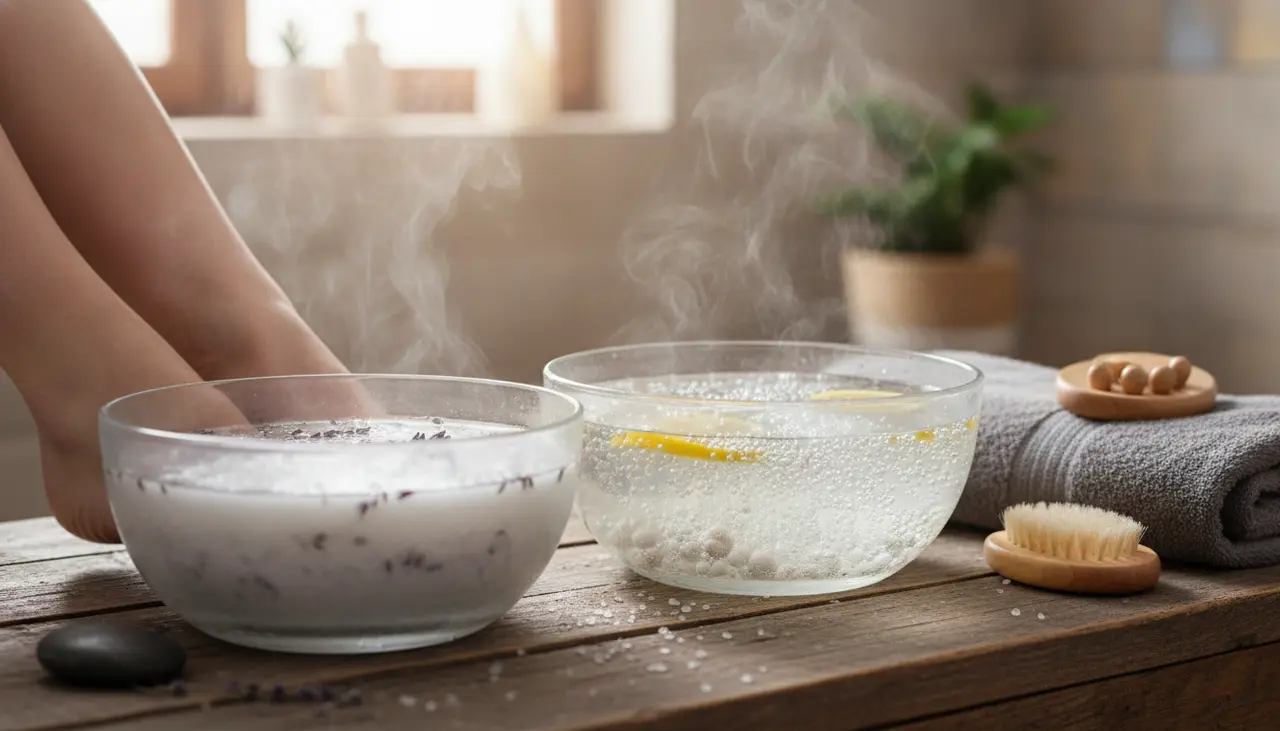
Epsom Salt vs. Sea Salt: Which Soak is Best for Your Tired Feet?
Disclosure: This post contains affiliate links. If you make a purchase through these links, we may earn a small commission at no extra cost to you.
The short answer to which soak is best depends entirely on your goal for the evening. If you are dealing with muscle aches, soreness, or "heavy" legs after a long day of chasing kids or standing at work, Epsom salt is your best choice because of its high magnesium content. If your goal is to soften stubborn calluses, detoxify the skin, or prep your feet for a deep exfoliation, sea salt is the superior option due to its diverse mineral profile and antimicrobial properties.
The Busy Adult’s Guide to the Perfect Soak
We’ve all been there. The kids are finally in bed, the house is quiet for the first time in fourteen hours, and your feet are throbbing. You want to do something kind for yourself, but you only have twenty minutes before you inevitably fall asleep.
This guide is for the busy professional and the "on-the-go" parent who needs high-quality results without the guesswork. We’re breaking down the science of the best foot soak for tired feet so you can choose the right tool for your specific needs, making your limited self-care time count.
Epsom Salt vs. Sea Salt: At a Glance
| Feature | Epsom Salt | Sea Salt |
|---|---|---|
| Chemical Composition | Magnesium Sulfate | Sodium Chloride + Trace Minerals |
| Primary Benefit | Muscle relaxation & inflammation support | Skin detoxification & exfoliation |
| Skin Feel | Softening, but can be slightly drying | Highly textured; leaves skin feeling "tight" and clean |
| Best Used For | Post-workout, pregnancy swelling, or general aches | Pre-pedicure prep, fungal prevention, and callus softening |
| Aroma | Neutral (takes essential oils well) | Briny/Natural (best with citrus or eucalyptus) |
When to Reach for Epsom Salt
Epsom salt isn't actually a "salt" in the traditional sense; it’s a naturally occurring mineral compound of magnesium and sulfate. Magnesium is a vital mineral that many of us are actually deficient in.
Best for: The "I Can't Sit Down" Aches If your feet feel like they are vibrating from exhaustion, Epsom salt is your best friend. The magnesium is thought to be absorbed through the skin (transdermal absorption), helping to relax the tiny muscles in your arches and heels.
- Pro: Excellent for reducing minor swelling and easing "tight" feelings in the feet.
- Con: It can be slightly dehydrating to the skin if used too frequently without a follow-up moisturizer.
When to Reach for Sea Salt
Sea salt is produced through the evaporation of ocean water. Unlike Epsom salt, it contains a variety of minerals like potassium, iron, and calcium.
Best for: The Pre-Pedicure Deep Clean If you are planning a full home pedicure routine, sea salt is the way to go. It acts as a natural disinfectant and is much more effective at drawing out impurities from the skin. If you’ve been wearing closed-toe shoes all day, a sea salt soak helps "reset" the skin’s microbiome.
- Pro: Superior for softening the thick skin on the heels, making it easier to use a manual file afterward.
- Con: Can sting if you have small cuts, blisters, or "over-clipped" cuticles.
How to Create Your 15-Minute Recovery Soak
You don't need a fancy bubbling foot spa to get results (though they are lovely!). A simple basin or even a clean bathtub will do.
- Temperature Check: Use warm water, not hot. Water that is too hot can actually increase swelling and strip the skin of natural oils.
- The Ratio: Add 1/2 cup of your chosen salt to a standard foot basin.
- The "Boost": Add 2-3 drops of Lavender essential oil for relaxation or Peppermint oil for a cooling sensation on "hot" tired feet.
- Soak Time: 15 to 20 minutes is the "sweet spot." Any longer and your skin may begin to prune, which makes it vulnerable to damage during filing.
- The Finish: Always rinse your feet with fresh water after a salt soak to remove any excess residue, then immediately apply a high-quality cream or balm.
If you are looking to take your skin renewal a step further after your soak, you might be interested in our deep dive on Foot Peel Masks: Which Ones Actually Work? (The Real Guide to the Shed) to handle those stubborn summer calluses.
Beginner Mistakes to Avoid
- Soaking with open wounds: If you have a blister that has popped or a deep "fissure" (crack) in your heel, skip the salt soak. It will irritate the tissue and delay healing.
- Forgetting the moisturizer: Salt is a drying agent. If you soak your feet and don't apply a cream afterward, you may find your heels cracking more than before.
- Using "Table Salt": While it is sodium chloride, table salt is highly processed and lacks the mineral complexity of sea salt or the magnesium of Epsom salt. It won't provide the same therapeutic benefits.
Frequently Asked Questions
Can I mix Epsom salt and Sea salt together? Absolutely! Mixing them gives you a "best of both worlds" experience—muscle relief from the magnesium and skin purification from the sea salt. A 50/50 blend is a favorite for a comprehensive home pedicure routine.
How often should I soak my feet? For most active adults, 2-3 times a week is plenty. Over-soaking can lead to overly soft skin that is prone to blisters.
Is it safe to soak my feet if I have a "tough" job? Yes, in fact, it's recommended. Keeping the skin soft and the muscles relaxed can prevent the buildup of painful calluses that often plague those in construction, nursing, or retail.
Recommended Supplies for Your Home Spa
To get started, we recommend keeping bulk bags of unscented salts on hand. This allows you to customize your scent with essential oils depending on your mood.
- Bulk Epsom Salt: Look for "USP Grade" to ensure purity.
- Dead Sea Salt: Known for having the highest mineral content of all sea salts.
- Essential Oil Starter Kit: Lavender, Eucalyptus, and Tea Tree are the "big three" for foot health.
By taking just twenty minutes a few nights a week to care for your foundation, you'll find that those long days feel just a little bit shorter. Your feet do a lot for you—it's okay to return the favor.