
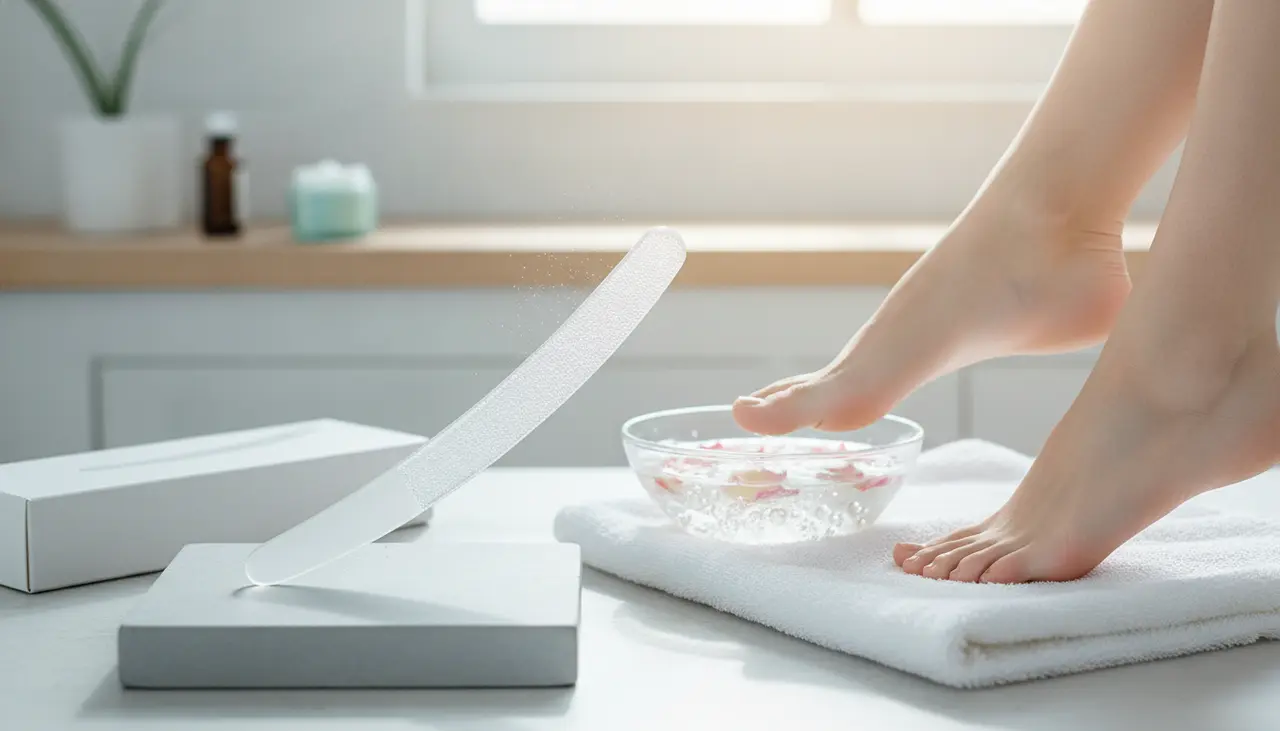
Nano-Glass Foot File Review: Is This High-Tech Tool the Secret to Salon-Smooth Heels?
Affiliate Disclosure: This post contains affiliate links. If you click through and make a purchase on Amazon or through a manufacturer’s site, I may earn a small commission at no extra cost to you. I only recommend tools that meet the high standards of The Heel Guide.
If you are looking for a way to manage dry, rough skin on your heels without the intensity of a metal rasp or the mess of a pumice stone, a nano-glass foot file is likely the answer. These tools use microscopic abrasive points etched directly into a glass surface to gently buff away dead skin. Unlike metal files, they are nearly impossible to over-use to the point of injury, making them the safest high-performance option for busy adults who need results fast.
Is a Nano-Glass Foot File Right for You?
This guide is designed for the person who wants professional-looking results without the "ouch" factor. If you’ve ever been intimidated by sharp pedicure tools or found that traditional pumice stones just don't do enough for your dry heels, nano-glass technology is your middle ground. It is particularly effective for those who need a quick, 5-minute maintenance routine between chores or after the kids are in bed.
Comparing the Tech: Nano-Glass vs. The Alternatives
| Feature | Nano-Glass Foot File | Metal "Cheese Grater" File | Traditional Pumice Stone |
|---|---|---|---|
| Material | Tempered Glass (Etched) | Stainless Steel | Volcanic Rock / Synthetic Foam |
| Skin Safety | High (Buffs surface only) | Low (Can cut healthy skin) | Medium (Can be abrasive) |
| Durability | High (Lasts years) | Medium (Dulls over time) | Low (Crumbles/Wears down) |
| Sanitization | Easy (Rinse with water) | Moderate (Needs deep scrub) | Difficult (Porous, traps bacteria) |
| Best Use Case | Dry or Wet skin | Heavy Calluses only | Light daily maintenance |
Why Nano-Glass is Changing the Home Pedicure Game
The "XYZ" of nano-glass technology (referring to the precision-etched surface) works by exfoliating at a microscopic level. Instead of "ripping" the skin, it turns dead skin cells into a fine powder.
Best for: Sensitive Skin and Regular Maintenance If you have skin that tends to get red or irritated easily, the nano-glass file is a dream. Because the "teeth" of the file are so small, they don't snag on healthy skin. It’s the perfect companion to a 15-minute pedicure routine because it requires very little prep work.
Best for: The Hygiene-Conscious One of the biggest struggles with home foot care is keeping tools clean. Pumice stones are porous and can harbor bacteria. Nano-glass is non-porous. You simply rinse it under hot water with a little soap, and it’s as good as new.
Pros and Practical Tradeoffs
The Pros:
- Durability: Unlike emery boards that wear out after two uses, a high-quality glass file can last for years if you don't drop it.
- Versatility: Most nano-glass files work equally well on dry skin (for a quick fix) or damp skin (after a shower).
- Finish: It leaves the skin feeling incredibly polished, almost like you’ve applied a primer to your heels.
The Tradeoffs:
- Fragility: It is glass. If it hits a tile bathroom floor, it will likely shatter.
- Speed on Heavy Calluses: While safer, it may take a few more passes than a sharp metal rasp if you have very thick, years-old calluses.
> Callus vs. Corn Management: It’s important to note that while a nano-glass file is excellent for surface calluses (broad areas of thickened skin), it is not designed to "dig out" corns. Corns usually have a deep internal core. For those, you'll want to focus on pressure relief and softening treatments rather than aggressive filing.
Beginner Mistakes to Avoid
- Filing in Circles: For the best results, use a back-and-forth motion or a singular direction. Circular motions can sometimes create uneven heat friction.
- Dropping the Tool: Always use the wrist strap if your file comes with one. Glass is durable against friction but weak against impact.
- Forgetting to Moisturize: Filing is only half the battle. To keep those results, always follow up with a high-quality Urea cream. You can find our top recommendations in The Heel Guide Master Buying Guide.
Frequently Asked Questions
How often should I use a nano-glass foot file? For most people, once a week is plenty to maintain smoothness. If you are just starting, you might use it twice in the first week to get to a "baseline" of smoothness.
Can I use it on wet feet? Yes! Nano-glass is effective on both. However, many users find that using it on dry skin produces a more satisfying "powdering" effect that makes it easier to see exactly where you still need to work.
Does it ever get dull? The etching on a true nano-glass file is part of the glass itself, not a coating. This means it shouldn't "wear off" like a traditional sandpaper-style file. As long as you keep it clean of skin debris, it will stay sharp.
Final Verdict
If you are building your ultimate home toolkit, the nano-glass foot file is a "must-have" Essential Toolkit item. It’s a supportive, gentle, and highly effective way to keep your feet feeling great without the stress of using sharp blades. It’s a small investment that saves a lot of time (and money) on professional salon visits.