
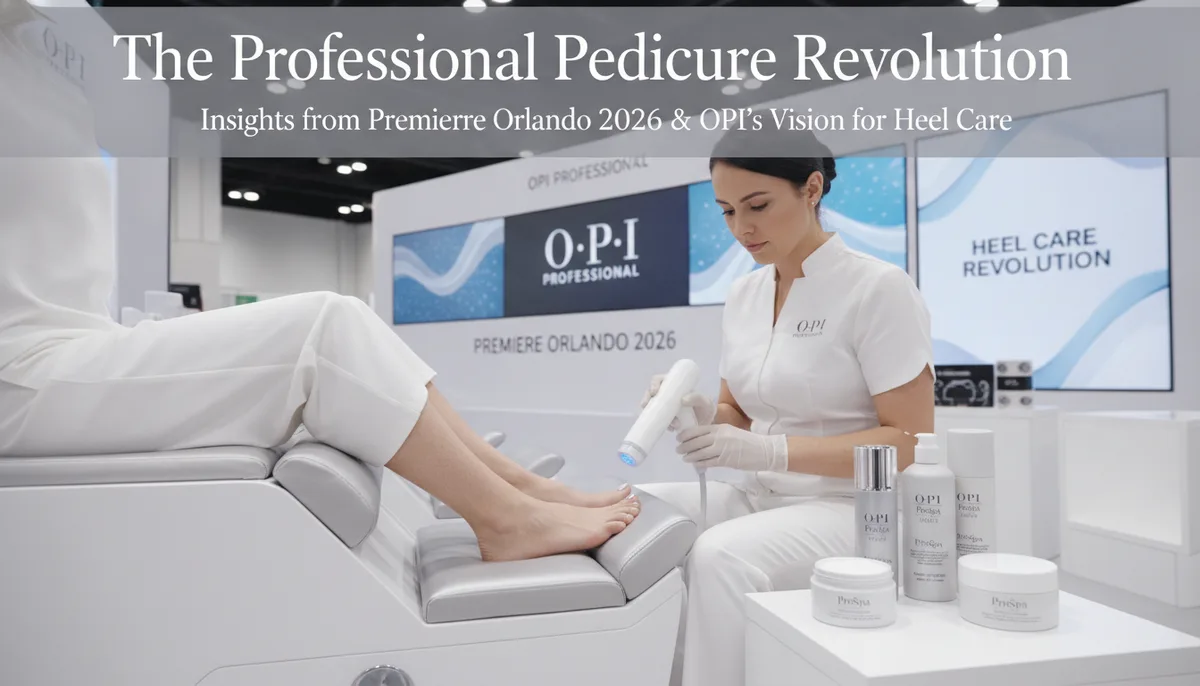
The Professional Pedicure Revolution: Insights from Premiere Orlando 2026 and OPI’s Vision for Heel Care
The landscape of professional beauty is undergoing a seismic shift, one where the health of the skin is becoming just as critical as the polish on the nails. This evolution was never more apparent than at the recent industry gatherings that have defined the mid-2020s. Specifically, Premiere Orlando 2026 welcomed more than 54,500 visits from beauty professionals and students, signaling a robust resurgence in the demand for hands-on education and professional-grade innovation.
For the average consumer, these numbers represent more than just a crowded convention center. They represent a collective commitment by the industry to elevate the standard of care for one of the most neglected parts of the body: the heels. When tens of thousands of professionals gather to learn, the result is a trickledown effect of better techniques, safer products, and more effective treatments available in salons worldwide.
The Massive Scale of Professional Beauty in 2026
The sheer volume of attendance at Premiere Orlando 2026—over 54,500 visits—highlights a pivotal moment for the nail and foot care sector. This wasn't merely a trade show; it was a laboratory for the future of "medical-grade" aesthetics. Professionals and students alike converged to witness the latest breakthroughs in chemistry and tool design, many of which are specifically targeted at the "problem heel."
In the professional world, the heel is often seen as the foundation of a quality pedicure. While a high-shine finish is the goal, the canvas—the skin of the foot—must be healthy. The influx of students at these events is particularly noteworthy. As explored in our deep dive into Premiere Orlando 2026 and the Future of Professional Heel Care: Insights for the Next Generation, this new wave of technicians is being trained with a "skincare first" mentality, moving away from aggressive, potentially damaging scraping methods toward sophisticated chemical exfoliation and moisture barrier repair.
OPI by the Numbers: Why Professional Grade Matters
When discussing the giants of the industry, OPI remains a central figure in the professional narrative. The brand's presence at major events serves as a benchmark for where the market is heading. OPI’s influence isn't just about color palettes; it’s about the science of the "ProSpa" experience.
Professional-grade products differ significantly from drugstore alternatives because of their concentration of active ingredients. For example, a professional callus softener used by a licensed technician at an event like Premiere Orlando is formulated to work in minutes, requiring a level of expertise to handle safely.
By focusing on "OPI by the numbers," we see a brand that prioritizes the professional's ability to deliver results that last weeks, not days. This is achieved through a combination of high-quality lipids, antioxidants, and exfoliating acids that mimic high-end facial skincare but are calibrated for the much thicker skin found on the heels.
Advanced Heel Care: Moving Beyond the Surface
The 54,500+ attendees at Premiere Orlando were not just there to look at new polish colors. A significant portion of the educational seminars focused on the pathology of the foot—understanding why heels crack and how to prevent it.
The "Professional Pedi" of 2026 is less about "filing down" and more about "dissolving and hydrating." This shift is crucial for anyone who suffers from chronic dry heels. Traditional files can sometimes create micro-tears in the skin if used improperly, leading to even thicker callus formation as the body tries to protect itself.
The Role of Urea and Alpha Hydroxy Acids (AHAs)
Professional education now emphasizes the use of keratolytic agents. Ingredients like Urea (in concentrations of 10% to 20% for home use, and higher for pros) work by increasing the water content of the skin while gently breaking down the protein (keratin) that makes up the callus.
When combined with AHAs like glycolic or lactic acid, these treatments provide a dual-action approach:
- Exfoliation: Removing the dead, hardened layers of the "stratum corneum."
- Hydration: Pulling moisture into the newly revealed skin cells.
This professional approach ensures that the "High-Shine Revolution" isn't just about the nails. As we’ve noted in our coverage of The High-Shine Revolution: OPI Chrome Effects and the Future of Professional Pedicures, a brilliant chrome finish looks its best when framed by smooth, healthy skin.
The Student Factor: Shaping the Future of Foot Wellness
The fact that students made up a large portion of the 54,500 visits at Premiere Orlando is a positive omen for the industry. These "next-gen" techs are entering a field that is increasingly intersectional, blending beauty with wellness and even podiatric insights.
Events like the Nail Tech Event of the Smokies further reinforce this educational drive. Professionals travel from across the country to refine their skills in specialized areas like "dry pedicuring" (using e-files for precision cuticle and heel work) and advanced massage techniques that improve circulation. You can read more about how these events are Elevating Professional Heel Care and Pedicure Artistry to see how the industry is moving toward a more holistic service model.
Practical Strategies for Maintaining Salon-Quality Heels at Home
While nothing replaces the expertise of a professional who has attended Premiere Orlando, you can maintain their work by adopting a "professional-adjacent" routine at home. The key is consistency and the use of the right tools.
1. The Weekly "Soft" Buff
Instead of using a harsh "cheese grater" style file, professionals recommend a high-quality stainless steel or etched glass file. Use it on dry skin before you shower for the most effective removal of dry cells.
2. The "Soak-Lock" Method
After your shower, while your skin is still slightly damp, apply a professional-grade foot cream. Look for products that contain ceramides or OPI’s signature cupuaçu butter and white tea extract. This "locks" the water into the skin, preventing the evaporation that leads to cracks.
3. Nightly Cuticle and Heel Oiling
It may sound counterintuitive to put oil on your heels, but a high-quality nail and skin oil can penetrate deeper than some thick creams. Applying a drop to the back of the heel and the nail beds every night can drastically extend the life of your pedicure.
The Future of the Industry: What 54,500 Visits Tells Us
The massive turnout for Premiere Orlando 2026 is a testament to the enduring value of the professional beauty industry. In an era of DIY tutorials, the "pro" remains the ultimate authority on health and safety.
For the consumer, this means that the next time you sit in a pedicure chair, your technician is likely armed with more knowledge than ever before. They are not just "painting toes"; they are managing the health of your feet, identifying potential issues before they become painful cracks, and using chemistry that was perfected in the labs of industry leaders like OPI.
As we look toward the latter half of the decade, the focus will continue to sharpen on the "Total Foot" experience. From the high-shine aesthetics of chrome to the deep-tissue health of the heel, the professional community is more energized—and better educated—than ever. Whether you are a student just starting out or a long-time enthusiast of professional foot care, the innovations coming out of 2026 are set to make "bad heel days" a thing of the past.